
Why Redwood
I've worked with a lot of wood over the years — ipe, cedar, Douglas fir, mangaris, and plenty of pressure-treated pine. I've also installed my share of composite decking. Each material has its place, and I learned something from every one of them.
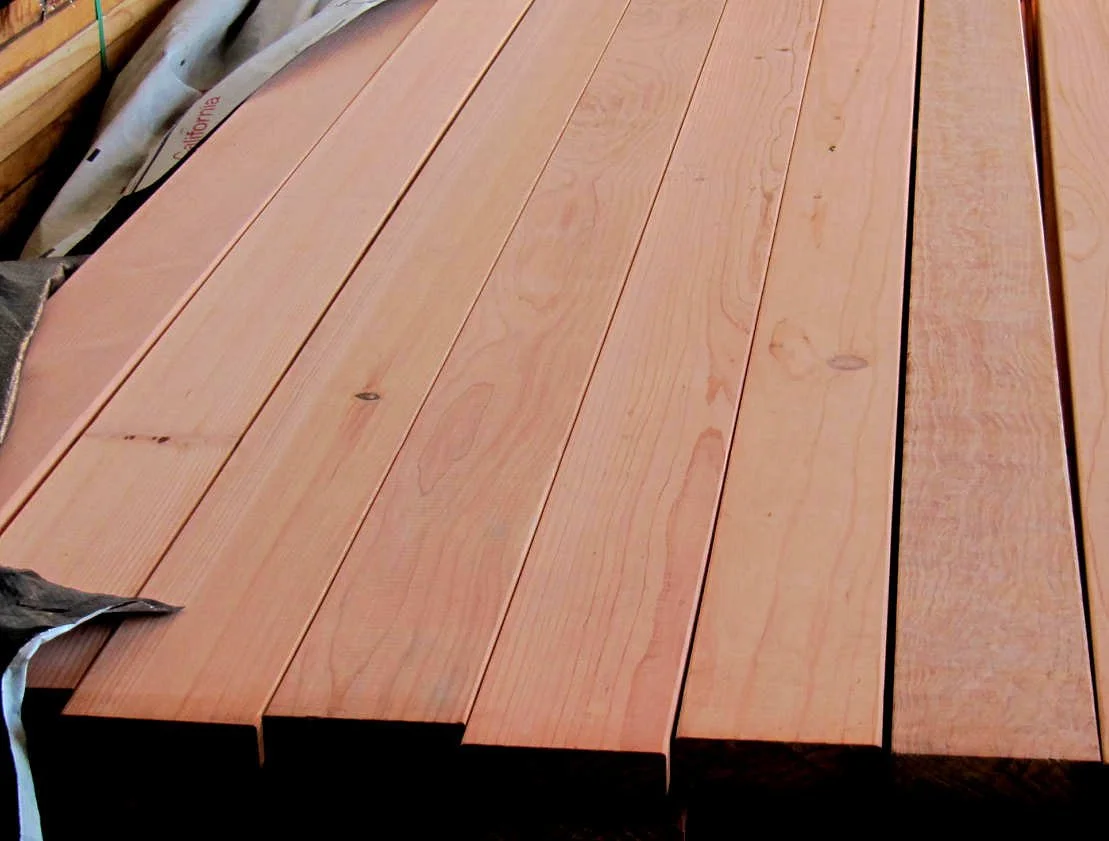
But the more I built, the more I kept reaching for redwood. There was something about the way it worked under my hands — forgiving, warm, honest. It didn't fight me the way tropical hardwoods sometimes do. It didn't feel like a compromise the way pressure-treated lumber always does. And it didn't pretend to be something it isn't, the way composite does.
Over time, what started as a preference became a commitment. Today, redwood is the material I build in, the material I know best, and the material I recommend to my clients. Here's why.
A Material Built for This Climate
Redwood is one of the few softwoods that's naturally resistant to rot, insects, and decay. The heartwood — the darker, reddish-brown center of the tree — contains tannins that act as a built-in preservative. That matters in Los Angeles, where outdoor structures deal with intense UV exposure, dry heat for most of the year, and periodic heavy rain that can sit in joints and end grain.
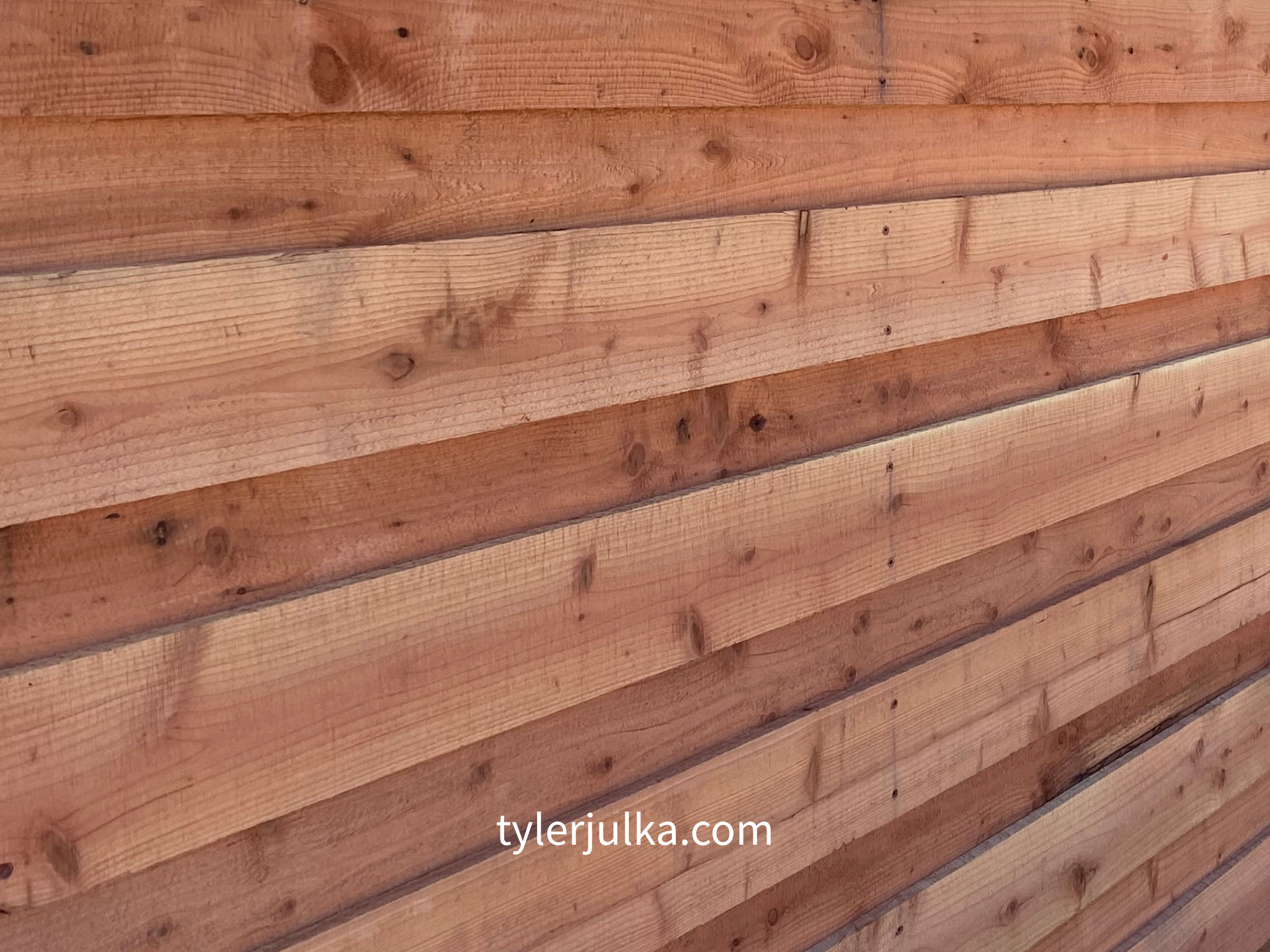
Unlike pressure-treated pine, which relies on chemical treatment to resist decay, redwood does it on its own. There's nothing injected into it. The protection is in the wood itself.
It's also dimensionally stable, meaning it doesn't swell and shrink as dramatically as many other species when moisture levels change. In a climate that can swing from bone-dry Santa Ana conditions to weeks of winter rain, that stability matters. A fence built from stable wood stays flat, stays tight, and keeps its shape over years of seasonal cycles.
And redwood is a California wood. It's grown, milled, and distributed right here. There's something that feels right about building outdoor structures in Los Angeles from trees that grew a few hundred miles north, in a climate not so different from the one the finished structure will live in. The wood already knows this weather.
Not All Redwood Is the Same
This is the part most homeowners don't know about, and it's the part that matters most.
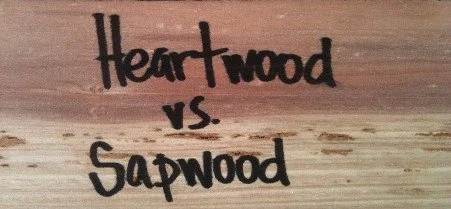
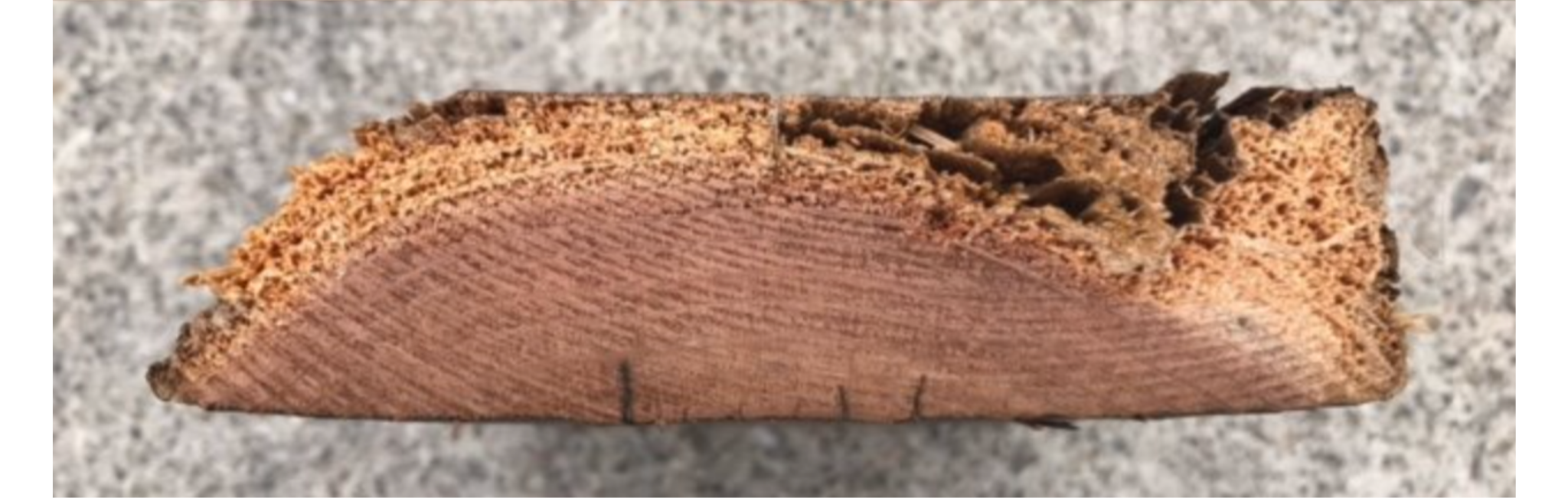
When people hear "redwood," they think of that rich, reddish-brown color. But when you go to a lumber yard and buy a bundle of redwood fence boards, what you actually get can vary enormously depending on the grade. Some boards are almost entirely heartwood — the dark, durable center of the tree. Others are mostly sapwood — the lighter, cream-colored outer wood that has almost none of the natural rot resistance that gives redwood its reputation.
Here's the thing: sapwood and heartwood come from the same tree, but they perform very differently outdoors. Heartwood resists decay naturally. Sapwood doesn't. A fence built with a high percentage of sapwood will look uneven from day one — streaky and pale where you expected warm red-brown — and the sapwood portions will deteriorate faster over time.
The grades that matter for outdoor work:
Construction Heart (Con Heart) is my preferred grade for most projects. Every board is predominantly heartwood, which means consistent color, consistent durability, and a structure that will perform the way you expect redwood to perform. It allows knots, which I think add character, but the wood itself is doing its job.
Construction Common (Con Common) is the grade most people end up with if they don't specify. It's a mix of heartwood and sapwood, and the ratio varies — sometimes you'll get boards that are 80% heartwood, sometimes you'll get boards that are mostly sapwood. If you go this route, the quality of the finished project depends almost entirely on how carefully the boards are selected.
Clear Heart is the premium grade — all heartwood, no knots, straight grain. It's beautiful and it performs flawlessly, but it costs significantly more. I use it when the project calls for it, particularly on gates and visible details where the wood is on display.
Merchantable Heart and other lower grades have their uses, but for anything fully exposed to the weather, I steer clients toward Con Heart as the baseline.

Why Selection Matters
This is where having a builder who knows redwood makes a real difference. When I'm sourcing material for a project, I'm not just ordering a grade and hoping for the best. I'm at the yard, going through the bundles, pulling boards and looking at each one. I'm checking the heartwood-to-sapwood ratio, looking at grain direction, feeling for moisture content, and setting aside anything that's going to cause problems down the road — boards that will cup, twist, check, or deteriorate prematurely.
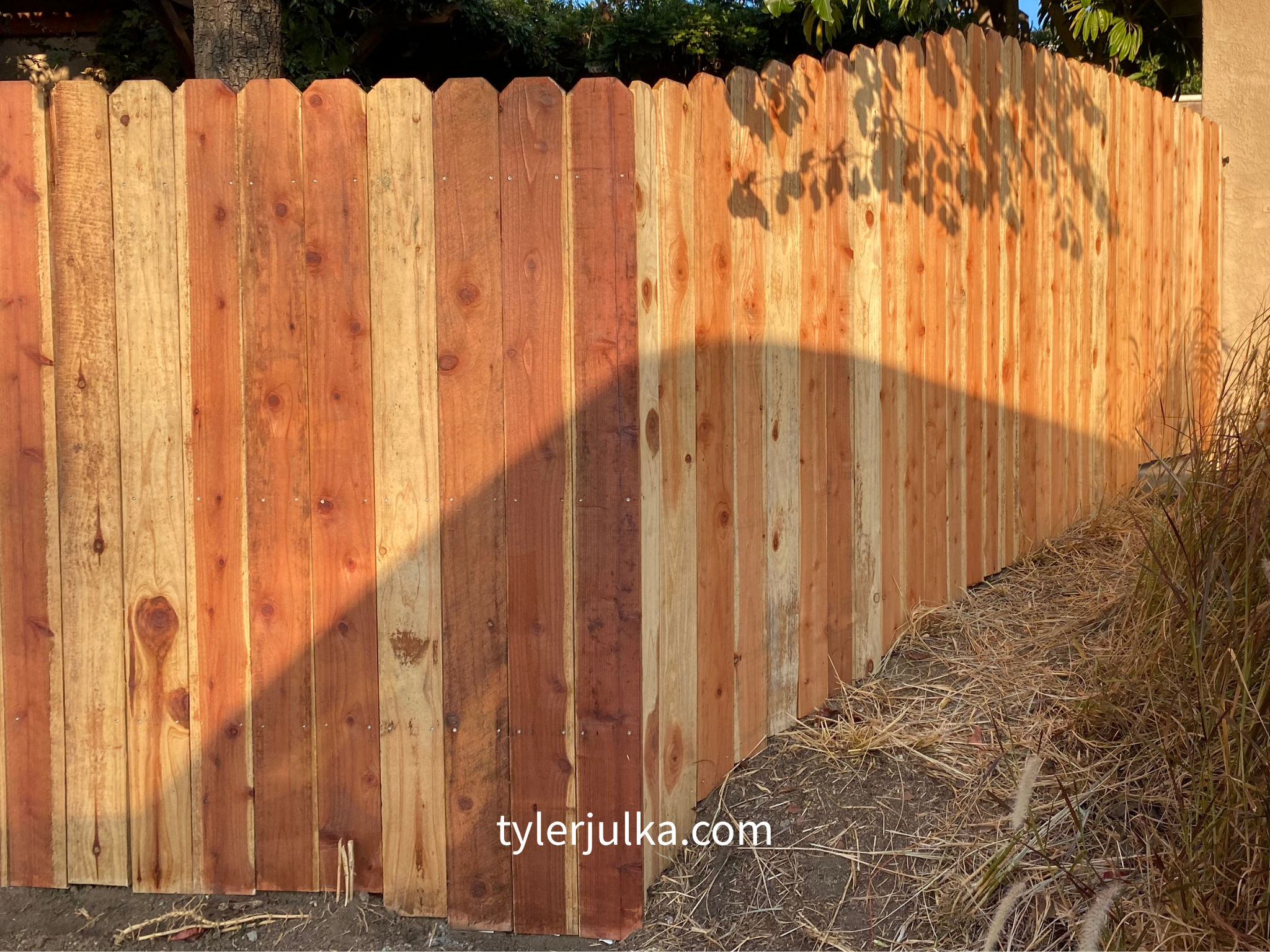
Con Common Redwood
Merchantable grade. Contains varying amounts of heartwood and sapwood. Not selected for appearance or quality.
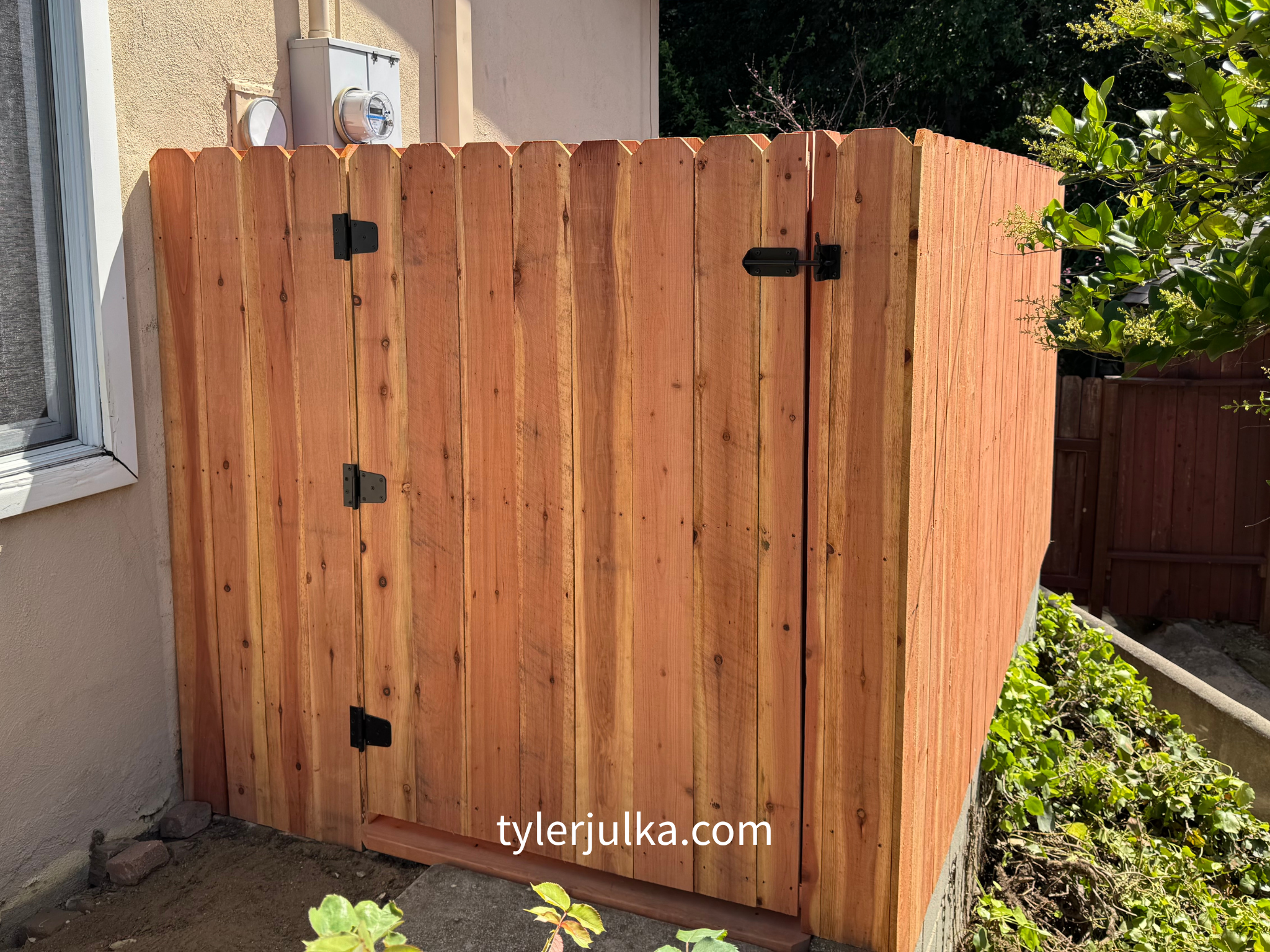
Select Con Common Redwood
Materials pulled one at a time by hand for mostly heartwood. Still has small amount of sapwood.
Con Heart Redwood
Selected to remove warped and split boards. Checked for natural defects like dead knots or wane.
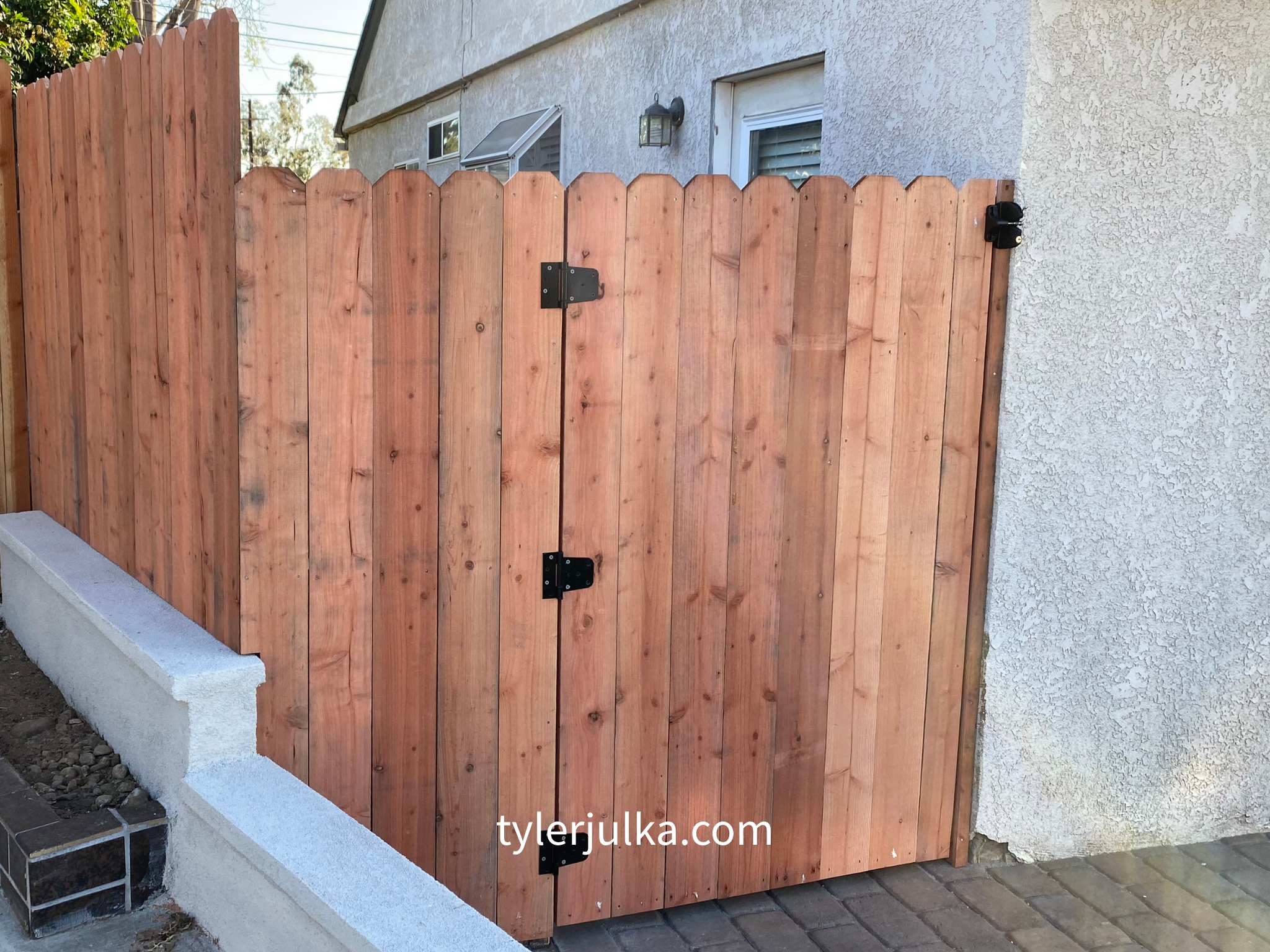
On a Con Common job, I'll typically select for 70–80% heartwood content minimum, rejecting boards that are sapwood-dominant. On a Con Heart job, I'm looking at grain patterns and matching boards for visual consistency. It takes more time, but it's the difference between a fence that looks intentionally built and one that looks like it was assembled from whatever showed up on the truck.
Most contractors don't do this. They order material, it gets delivered, and they build with what they get. That works fine when you're building volume and the material is a commodity. But if you're building something you want to be proud of — and something the homeowner is going to look at every day for the next twenty years — the selection process matters as much as the construction.
How Redwood Ages in Los Angeles
One of the most common questions I get is about how redwood will look over time. The answer depends on two things: whether it's finished (stained or sealed) and which direction it faces.
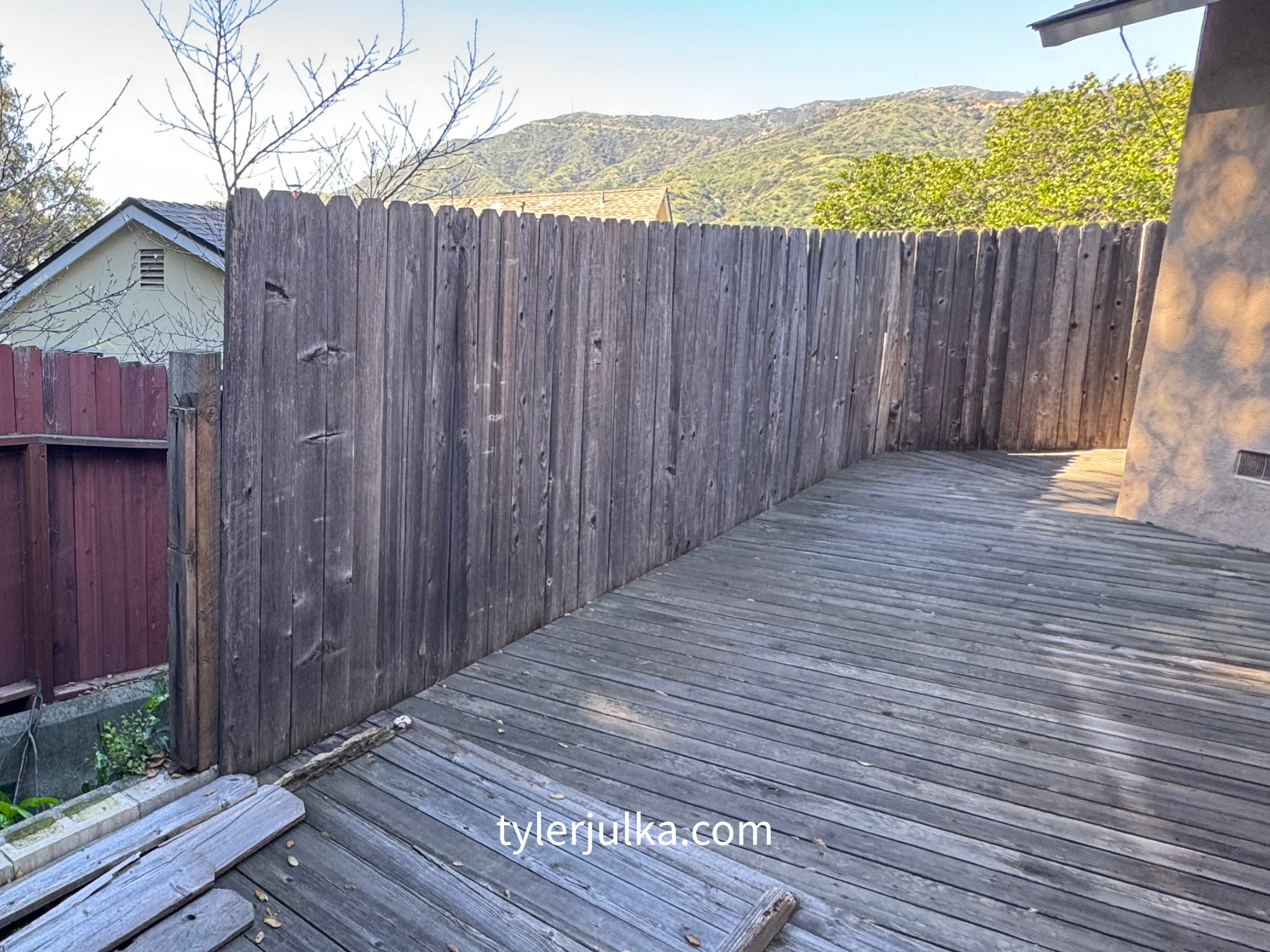
Unfinished redwood will weather to a silver-grey over time. In the LA foothills, this typically happens within the first year or two, starting on the sun-facing side. The south and west faces go grey fastest. North-facing surfaces hold their color longer. The silver patina is surface-level — it doesn't affect the structural integrity of the wood. A lot of my clients actually prefer the weathered look. It's honest, it's low-maintenance, and it gets more beautiful with age, not less.
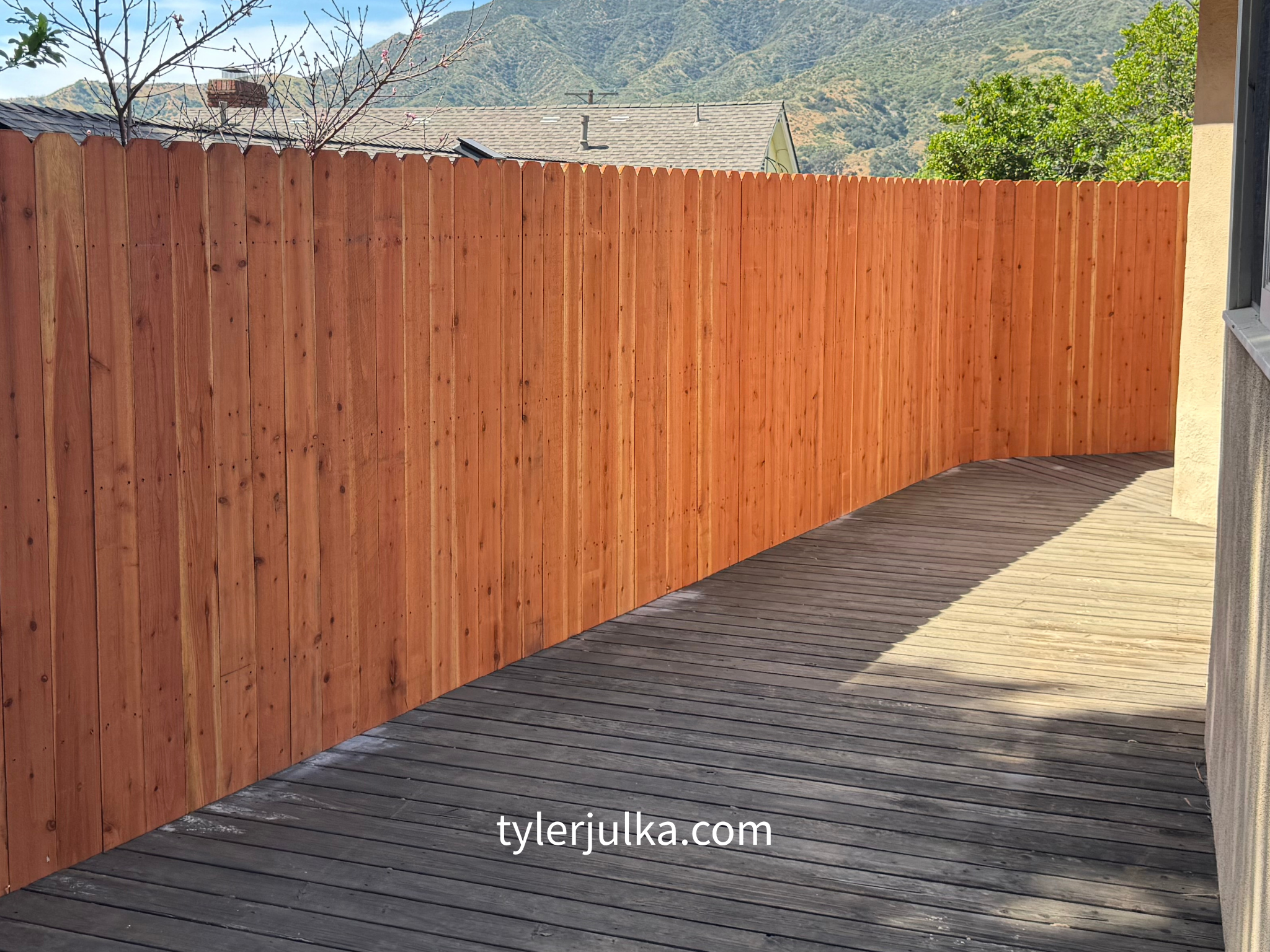
Finished redwood — typically sealed or stained with an oil-based product — will hold its original color longer, but it does require maintenance. How often depends on the product, the exposure, and how much UV the surface gets. In most cases, you're looking at reapplication every two to four years on the most exposed faces.
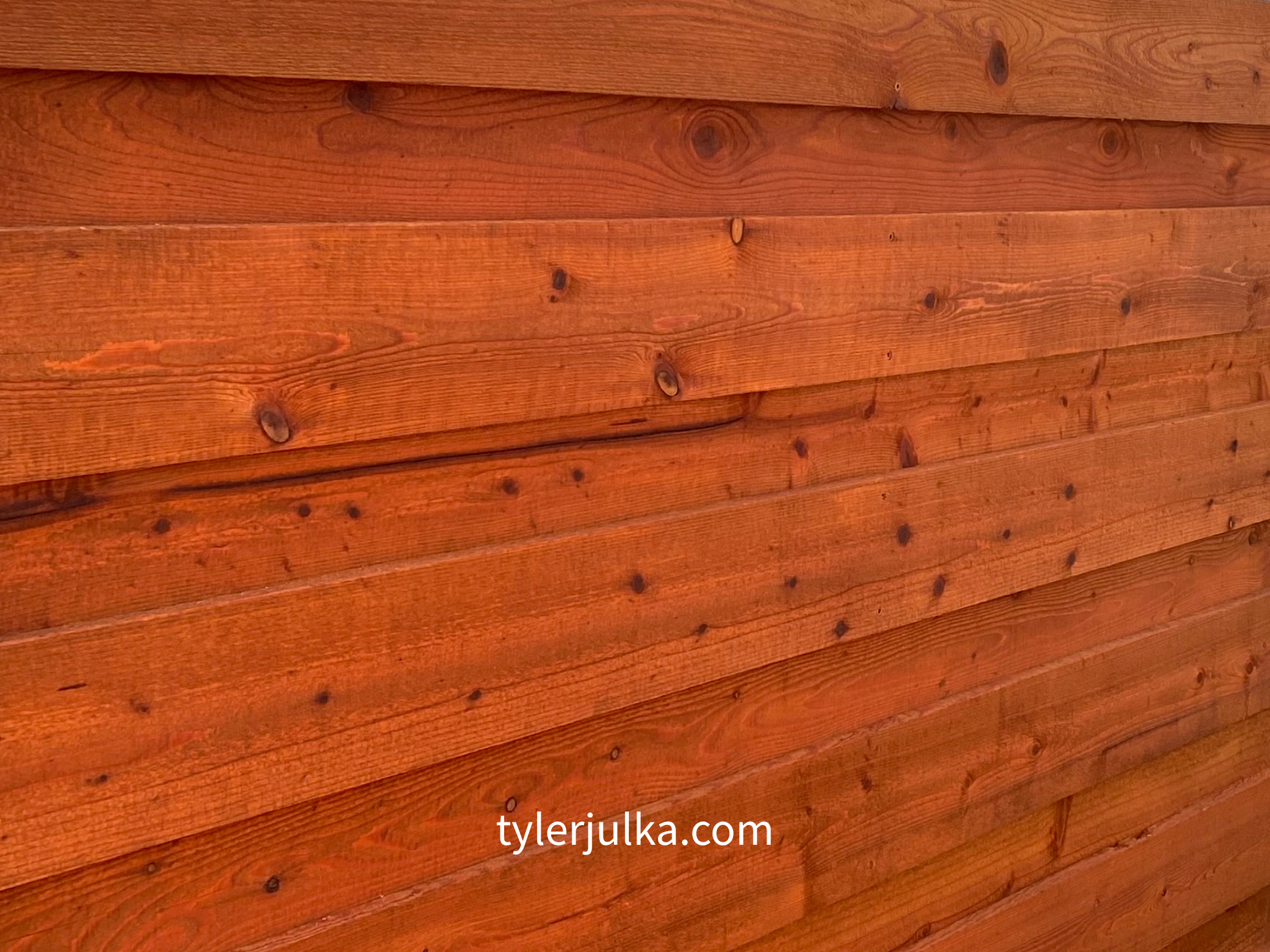
Either approach works. What doesn't work is neglecting a finish that was applied and expecting it to hold up on its own indefinitely. A failed finish — peeling, flaking, blotchy — looks worse than wood that was never finished at all. If you're not sure you want to commit to the maintenance, unfinished is a perfectly good choice. I can walk you through the options for your specific project and exposure.
Regardless of finish, the structural performance of well-selected redwood heartwood in the LA climate is excellent. I have projects from five and six years ago that are holding up exactly as they should — tight joints, no warping, no rot, no structural issues. The wood is doing what it's supposed to do.
What About Other Materials?
I get asked about alternatives regularly, and I think it's worth being honest about the trade-offs.
Western Red Cedar is a beautiful wood with excellent natural decay resistance — in many ways, it's redwood's closest cousin. I've built with it and I respect it. The main differences for my work: cedar is softer and more prone to denting, it has a stronger smell that some people love and others don't, and the supply chain in Southern California favors redwood. If you're in the Pacific Northwest, cedar is the obvious local choice. Here in LA, redwood makes more sense geographically and practically.
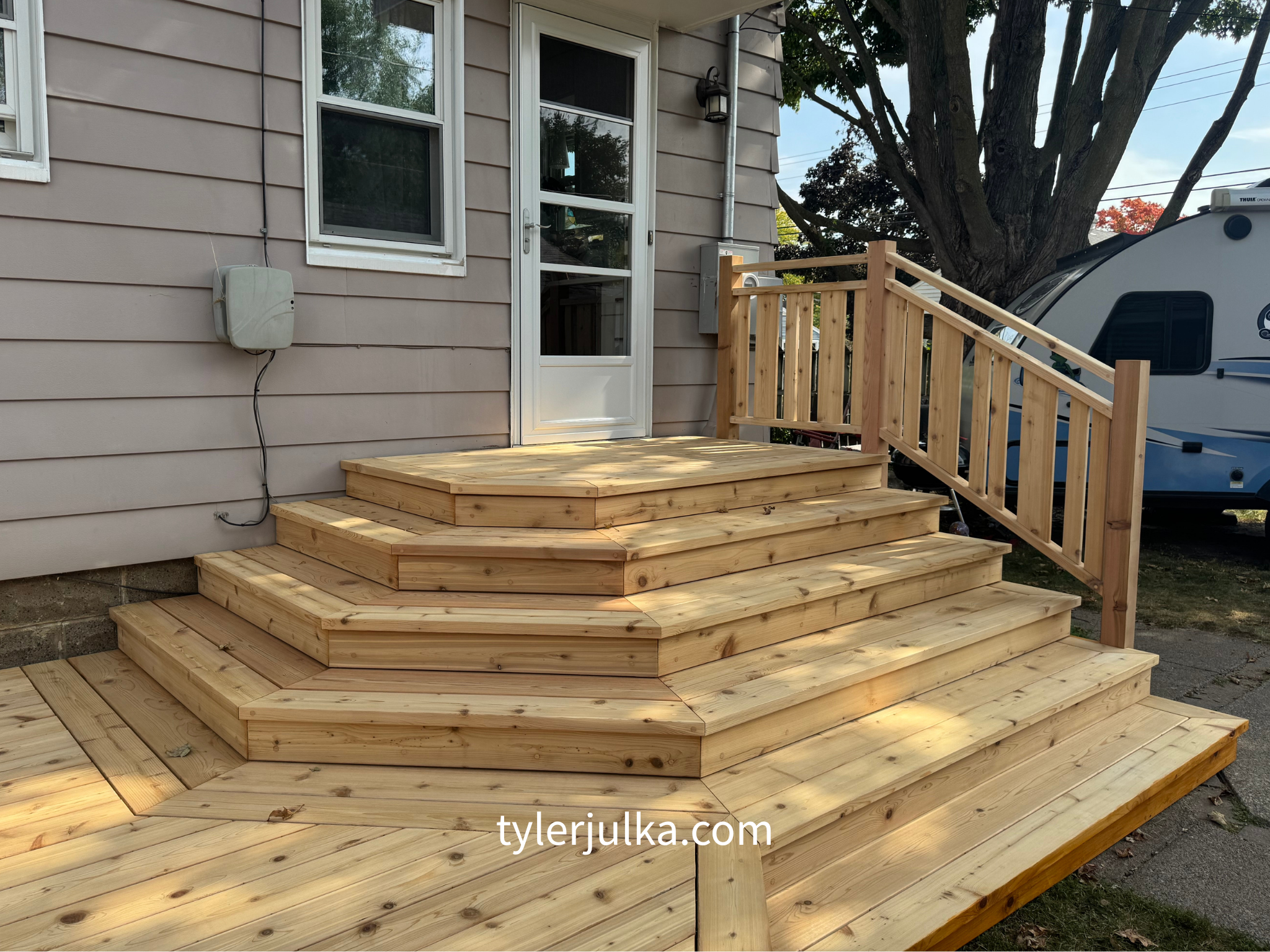
Ipe and Tropical Hardwoods (mangaris, golden balau, cumaru) are incredibly dense, incredibly durable, and incredibly expensive. They're also incredibly hard to work with — pre-drilling every fastener, dealing with wood that dulls blades in minutes, and managing a material that's so dense it barely accepts a finish. The results can be stunning, and I've built projects in ipe that I'm very proud of. But the cost is often two to three times that of redwood for materials alone, the sourcing raises environmental questions that are hard to answer cleanly, and the workability is a different experience entirely. For most residential outdoor projects in LA, I don't think the premium is justified.
Pressure-Treated Lumber is the budget option, and it has its place. It's cheap, it's widely available, and the chemical treatment does provide decay resistance. But it arrives wet, it shrinks and warps dramatically as it dries, and the wood itself is low-quality pine or fir that checks, splits, and twists over time. You're also building with wood that's been infused with chemical preservatives, which matters to some people and doesn't matter to others. For a utilitarian structure where appearance isn't the priority, pressure-treated can work. For anything custom, anything visible, anything you want to enjoy looking at — I'd steer you elsewhere.
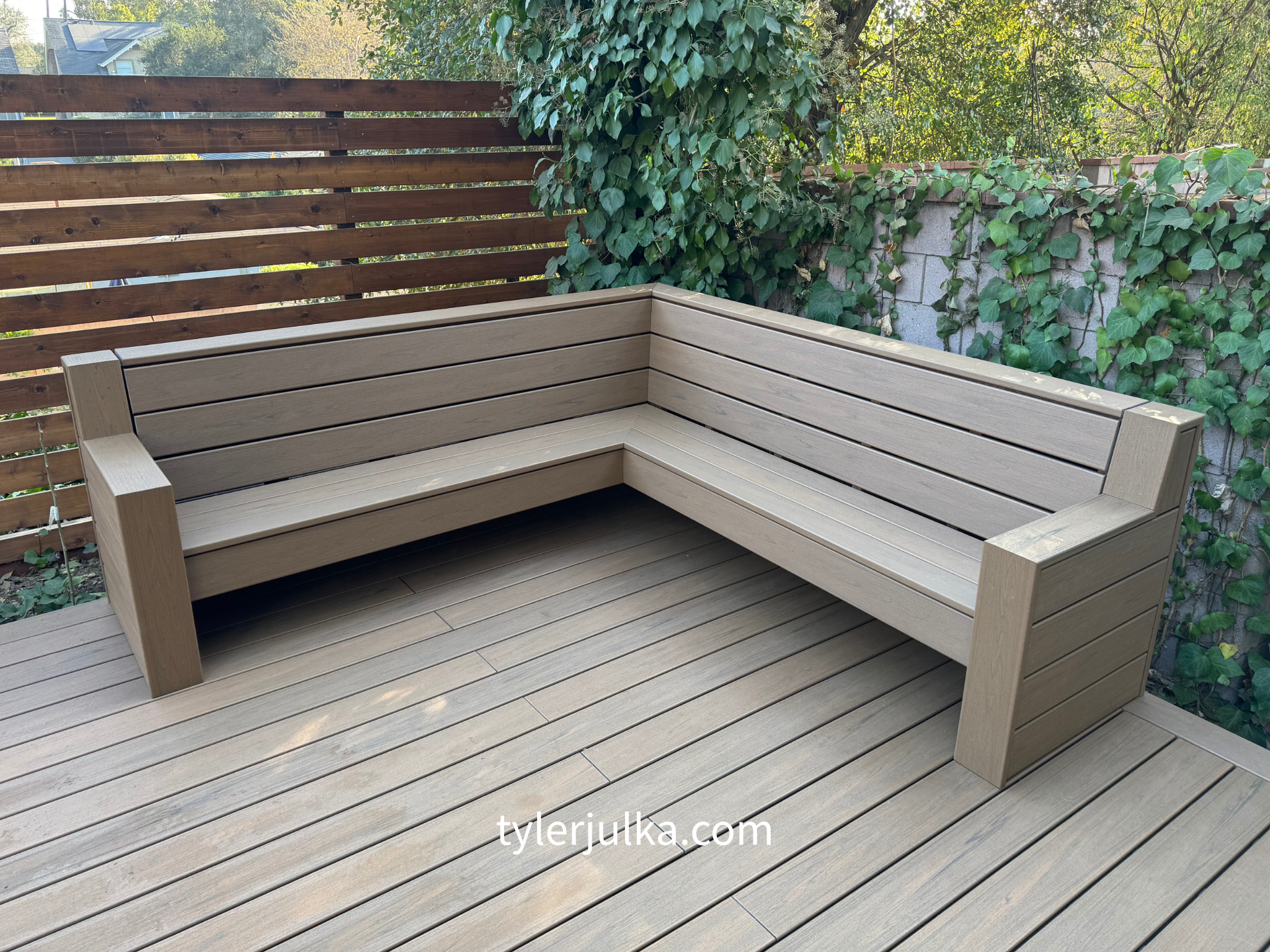
Composite Decking and Fencing (Trex, TimberTech, etc.) is a manufactured product designed to be low-maintenance, and it delivers on that promise. It won't rot, it won't need finishing, and it looks consistent from board to board. What it won't do is feel like wood, because it isn't. It's plastic and wood fiber, and it looks and feels exactly like that. It also gets hot in direct sun — significantly hotter than natural wood — which matters on a deck you walk on barefoot. It has no grain, no variation, no life. It ages by fading, not by developing character. For some clients, the maintenance trade-off is worth it. For my work, I'd rather build with something real.
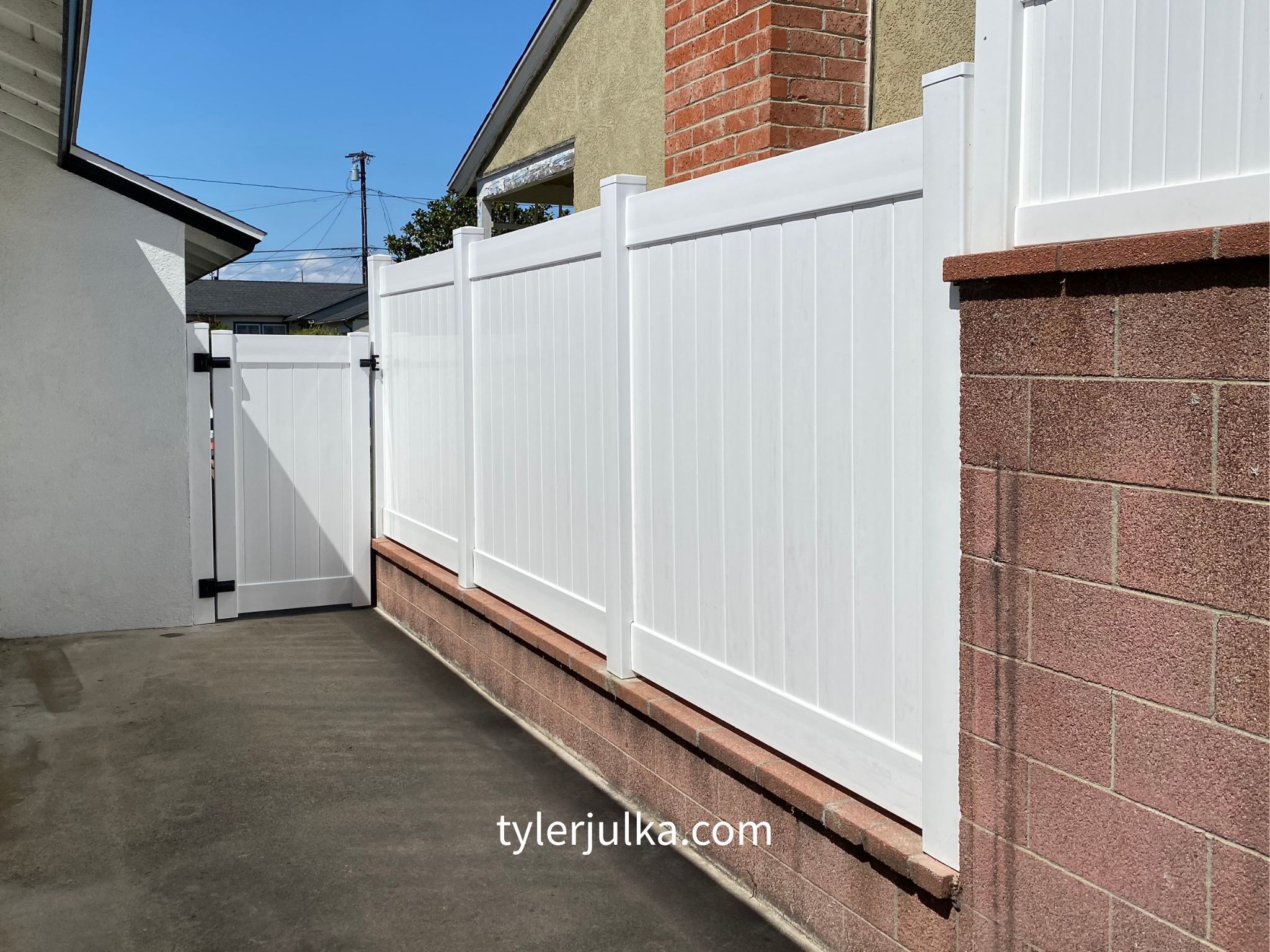
Vinyl Fencing is the lowest-maintenance option available. It won't rot, won't need paint, and won't change color. It's also hollow, lightweight, and looks exactly like what it is — plastic molded to imitate wood. The seams are visible, the color is uniform in a way that reads as artificial, and it becomes brittle over time in heavy UV exposure, which is most of the year in Los Angeles. It also can't be custom-designed in any meaningful way — you're choosing from a catalog of standard panel configurations. For a client whose only priority is zero maintenance at the lowest possible cost, vinyl has a place. For custom work, it's not a material I'd recommend or work with.
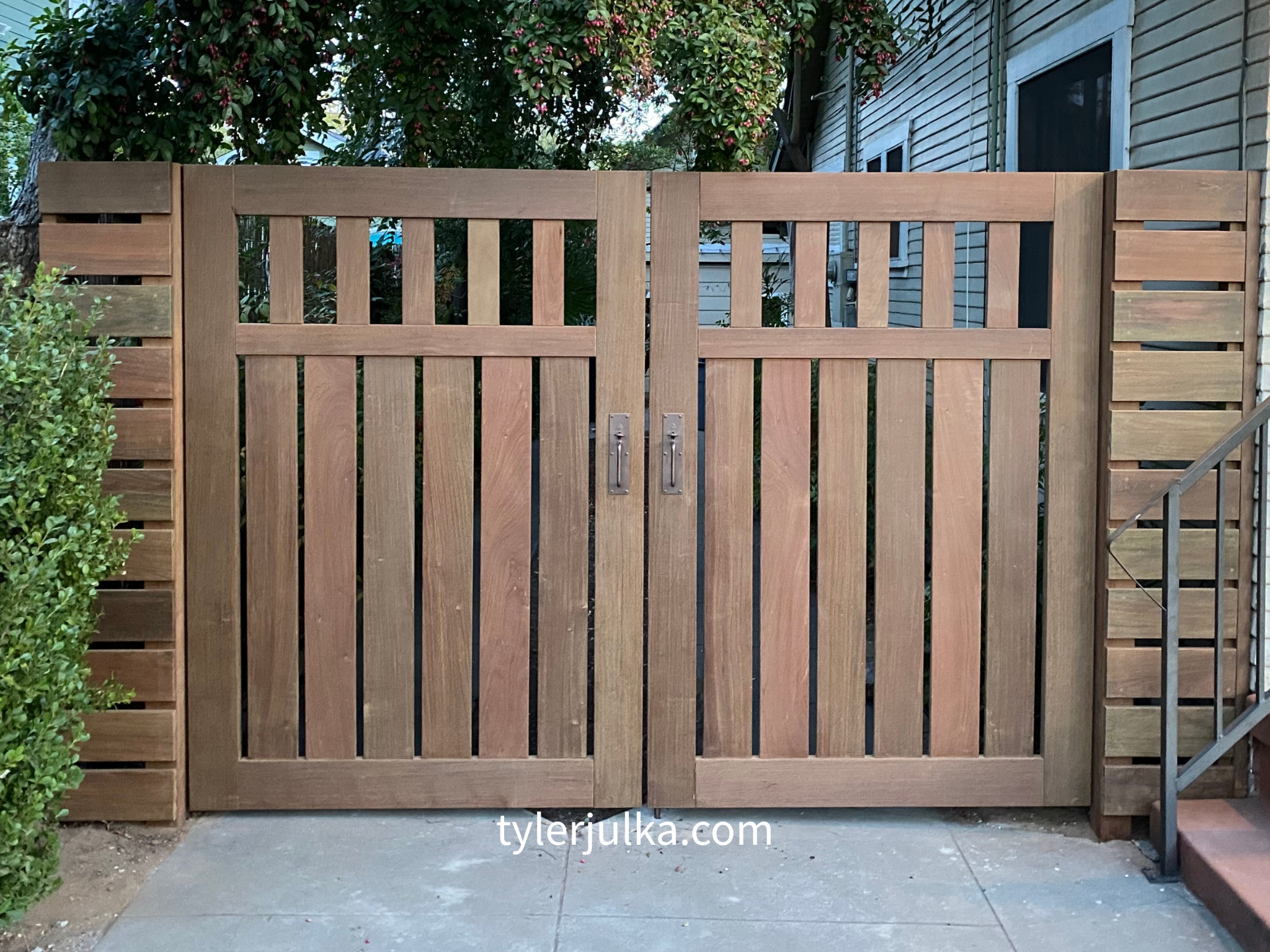
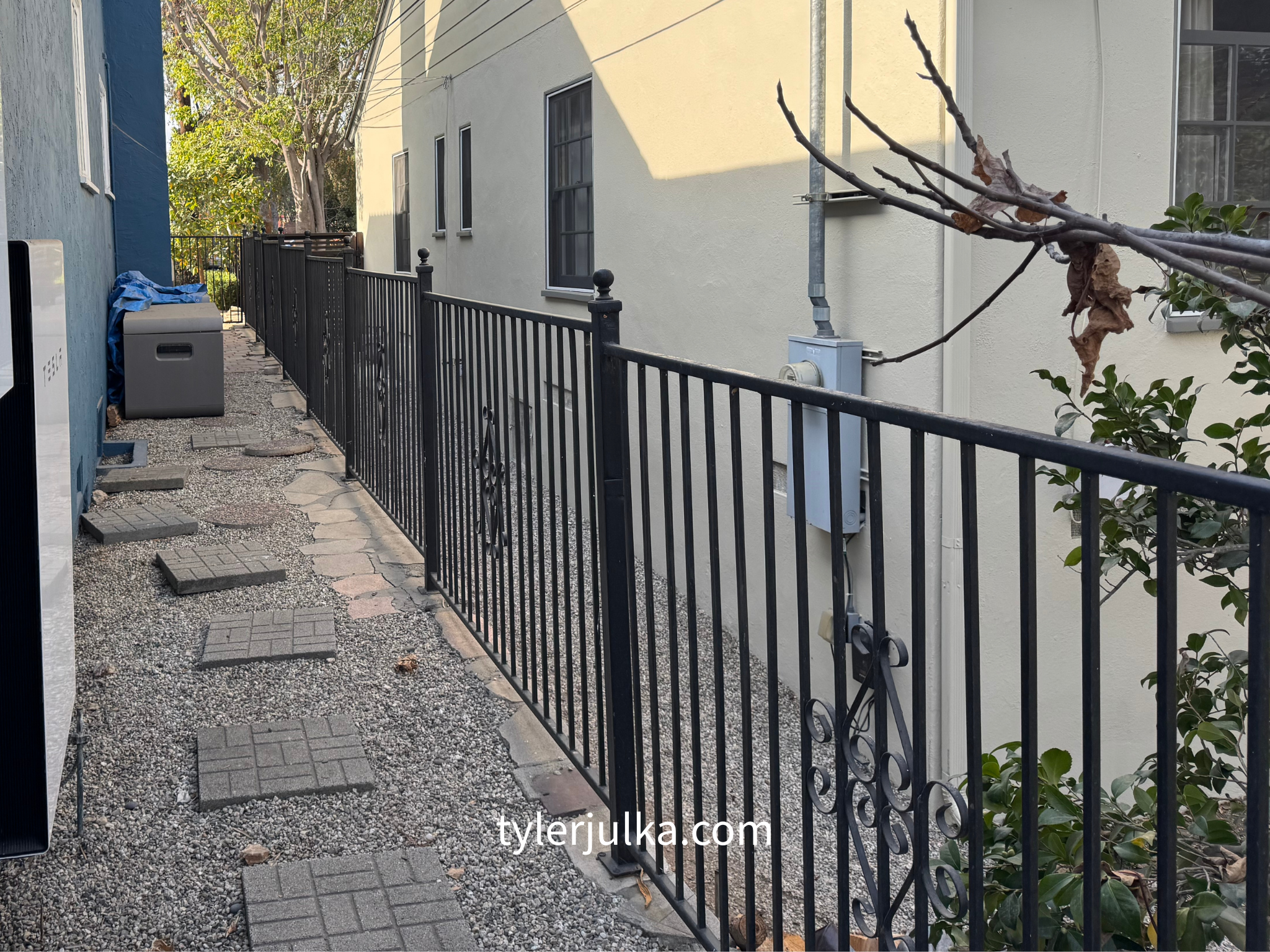
Wrought Iron, Steel, and Aluminum fencing and gates are durable, low-maintenance, and well-suited to certain applications — particularly security fencing, pool enclosures, and properties where visibility through the fence line is desirable. They're a different category entirely from what I build. Metal fences and gates don't provide privacy, they don't soften the landscape, and they don't have the warmth or tactile quality of wood. If security or visibility is the primary goal, metal may be the right call — but it's a different trade, and I'd refer you to an ornamental iron specialist. Where I do occasionally work alongside metal is in hybrid designs — a steel post structure with redwood infill panels, or a wood gate hung on a welded steel frame for added rigidity. Those combinations can be effective when the site or the design calls for it.
I'm not interested in talking anyone out of a material that's right for their situation. If composite or pressure-treated is what makes sense for your project, I'll tell you that honestly and help you find a builder who specializes in it. My commitment to redwood isn't about being rigid — it's about going deep on one material so I can build better with it than someone who spreads their knowledge across everything.
The Simple Version
Redwood is a California wood that's naturally durable, beautiful to work with, and built for this climate. When you pair it with careful grade selection and a builder who knows the material, the result is an outdoor structure that looks right from day one and only gets better from there.
If you'd like to talk about what redwood can do for your property, I'd enjoy that conversation.