Why One Section of This Altadena Fence Survived the Eaton Fire — and What We Changed Because of It
A rebuild case study from the Eaton Fire corridor. Redwood Standard / T.J. Julka Construction, CSLB #1104821.
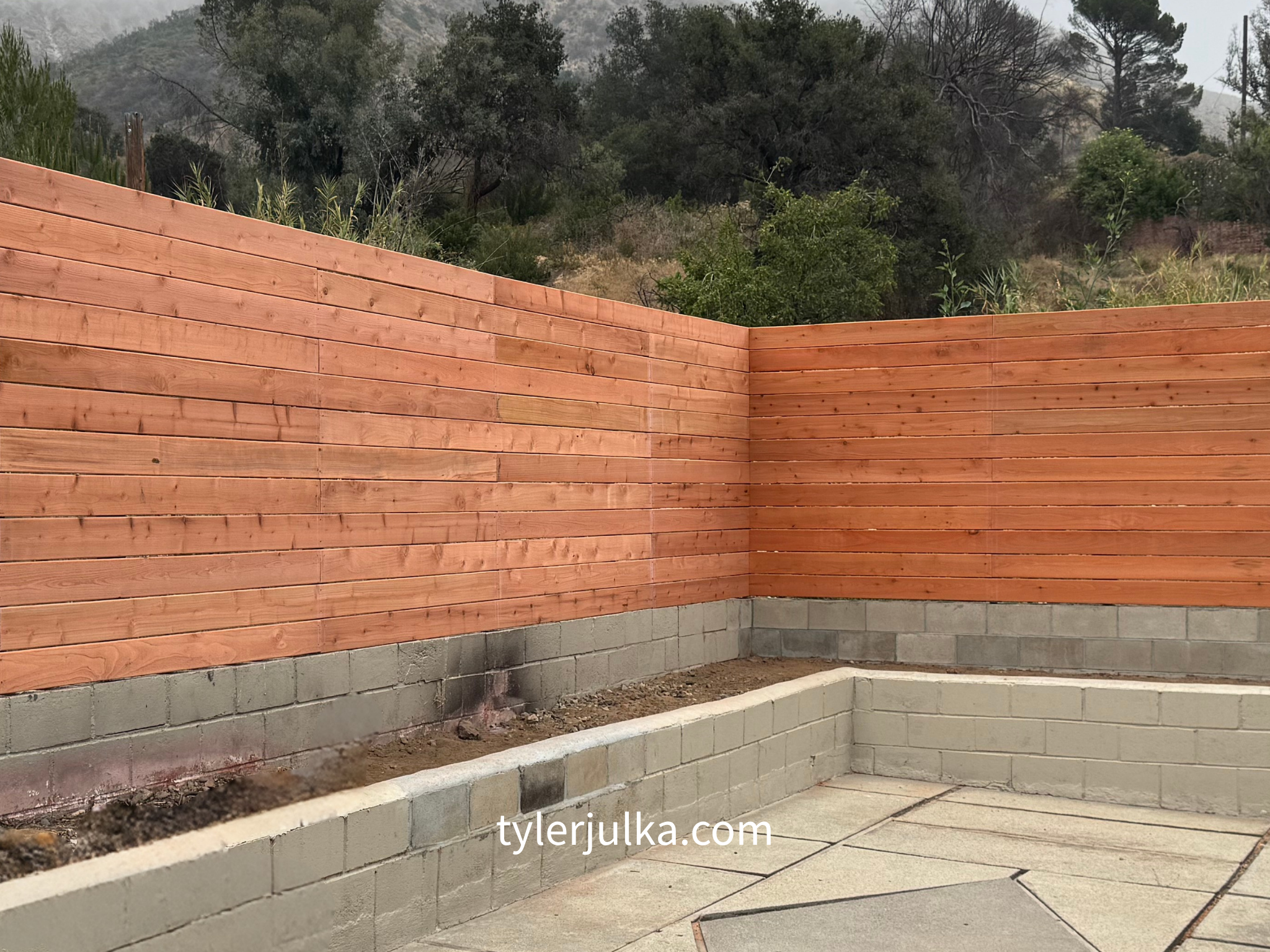
Con Heart Redwood horizontal privacy fence in Altadena.
The fence that shouldn't be standing
When I first walked the property, most of the perimeter was gone. What the Eaton Fire left behind was a line of steel posts set into a block wall with nothing between them — the wood dog-ear fence that ran along the open, vegetated side of the lot had burned so completely there was nothing left to remove. The hillside behind it was cleared down to dirt.
Except for one section.
Along the narrow side path closest to the house, the same fence — same boards, same age, same construction — was still standing. Grey, weathered, singed along the board edges, but structurally intact. Cosmetic damage, nothing more. A few feet away, total loss. Here, a fence you could lean on.
That's the kind of detail you don't walk past.
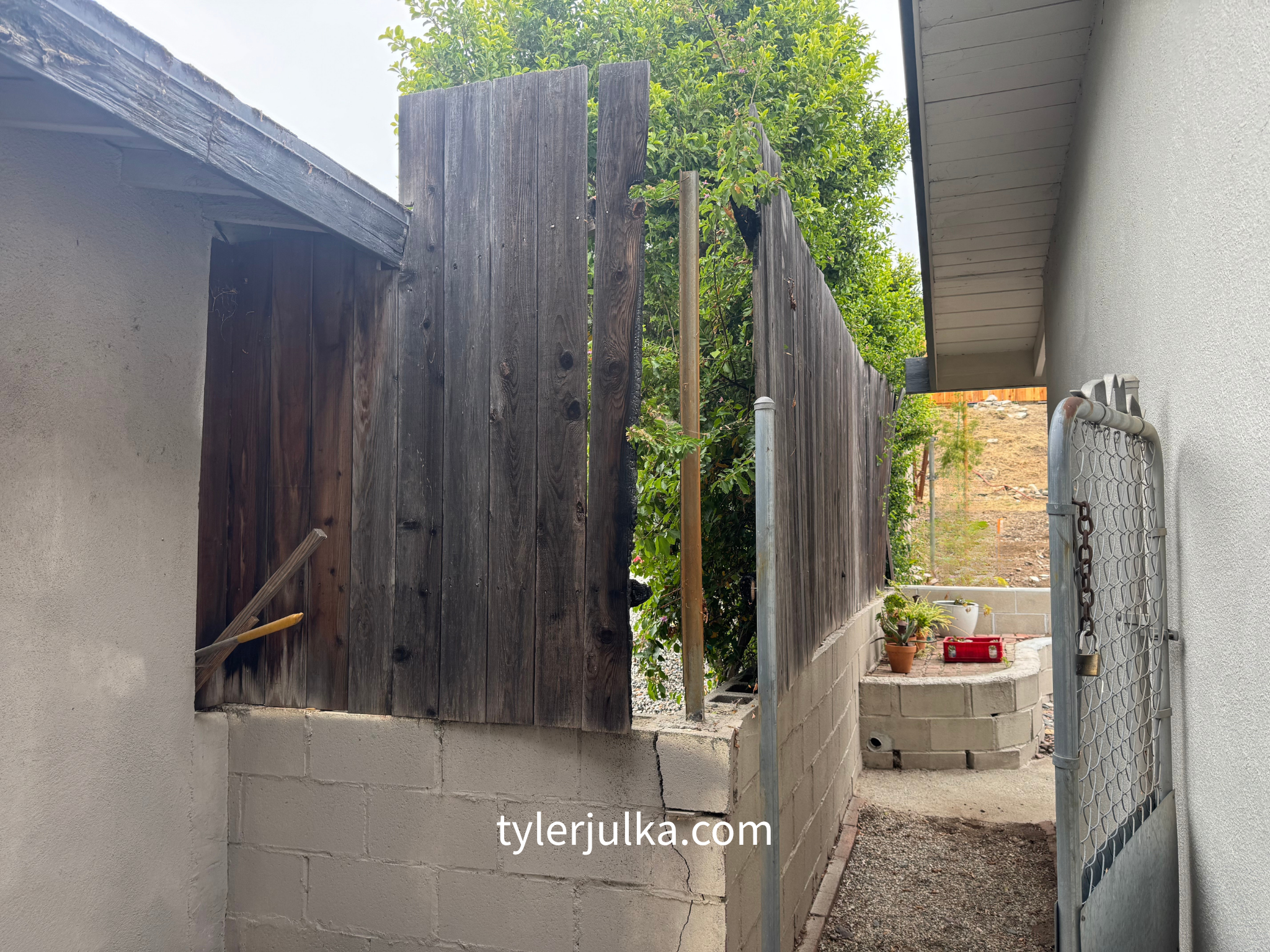
The corner became hot enough for ignition and luckily didn’t follow the line to the neighbor’s home.
Why it survived
We spent real time on this — standing in the side path, trying to put ourselves at the moment of the fire and imagine how the flames worked around everything. Here's my read.
The hedge acted as a heat shield. The surviving section sat behind a green, living hedge. Hydrated foliage absorbs an enormous amount of radiant heat — energy that would otherwise have pushed those boards past their ignition point. You can see the evidence in the photos: the survival line tracks the hedge almost exactly. Where the green cover ends, the fence ends.
The enclosed side path starved the embers. Out on the open hillside, wind-driven embers had everything they needed — fuel, airflow, time. The tight corridor between the house and the fence line didn't give embers the same accumulation or the wind the same feed. The char on the surviving boards tells that story: wood that caught, and couldn't carry. Flame touched this fence and failed to sustain.
The house held, so the whole pocket held. The home itself survived, which means this entire micro-zone saw lower exposure than the rest of the property. The fence's survival is partly the house's story.
I'll also say plainly what I don't know: how the fire skipped this long section and still torched the corner beyond it. I have theories, not answers. Fire behavior at that scale doesn't owe anyone a clean explanation — and I trust the observations more because of it.
Hold onto that hedge detail, though. It matters later — and not in the way you'd think.
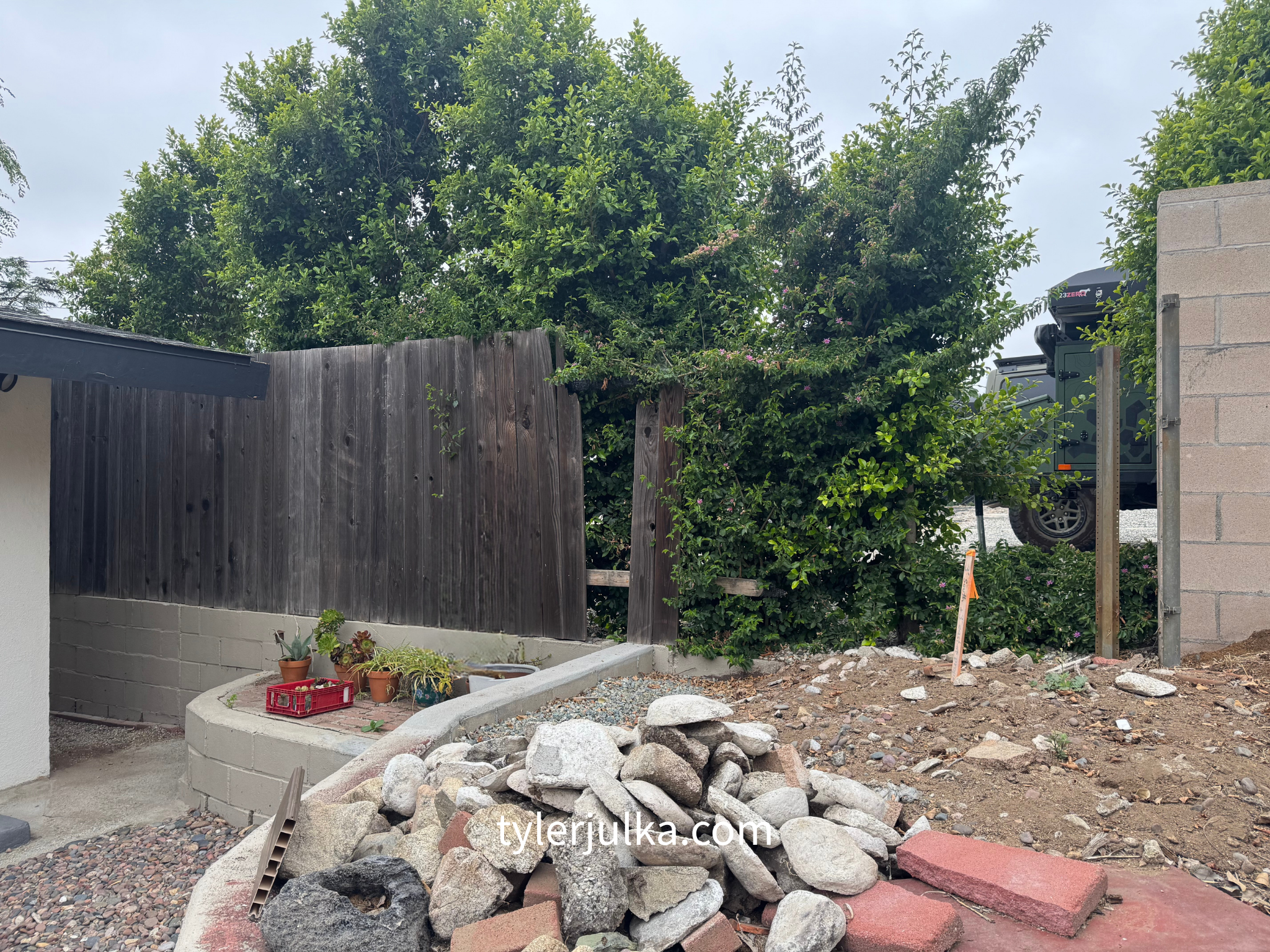
The hedges that may have saved the remaining fence and potentially the homes.
The brief
My clients wanted their perimeter back: a 6-foot horizontal privacy fence, wood, modern and clean. Landing inside their budget is what made a premium material possible. We specced Construction Heart redwood: naturally rot- and insect-resistant, no chemical treatment, and it ages into the landscape instead of against it.
One early decision set the tone for the whole build: the original steel posts, set in the block wall, had been through the fire and were still true. We kept them. New brackets, new wood, but the bones of this fence went through the Eaton Fire and are holding up the rebuild.
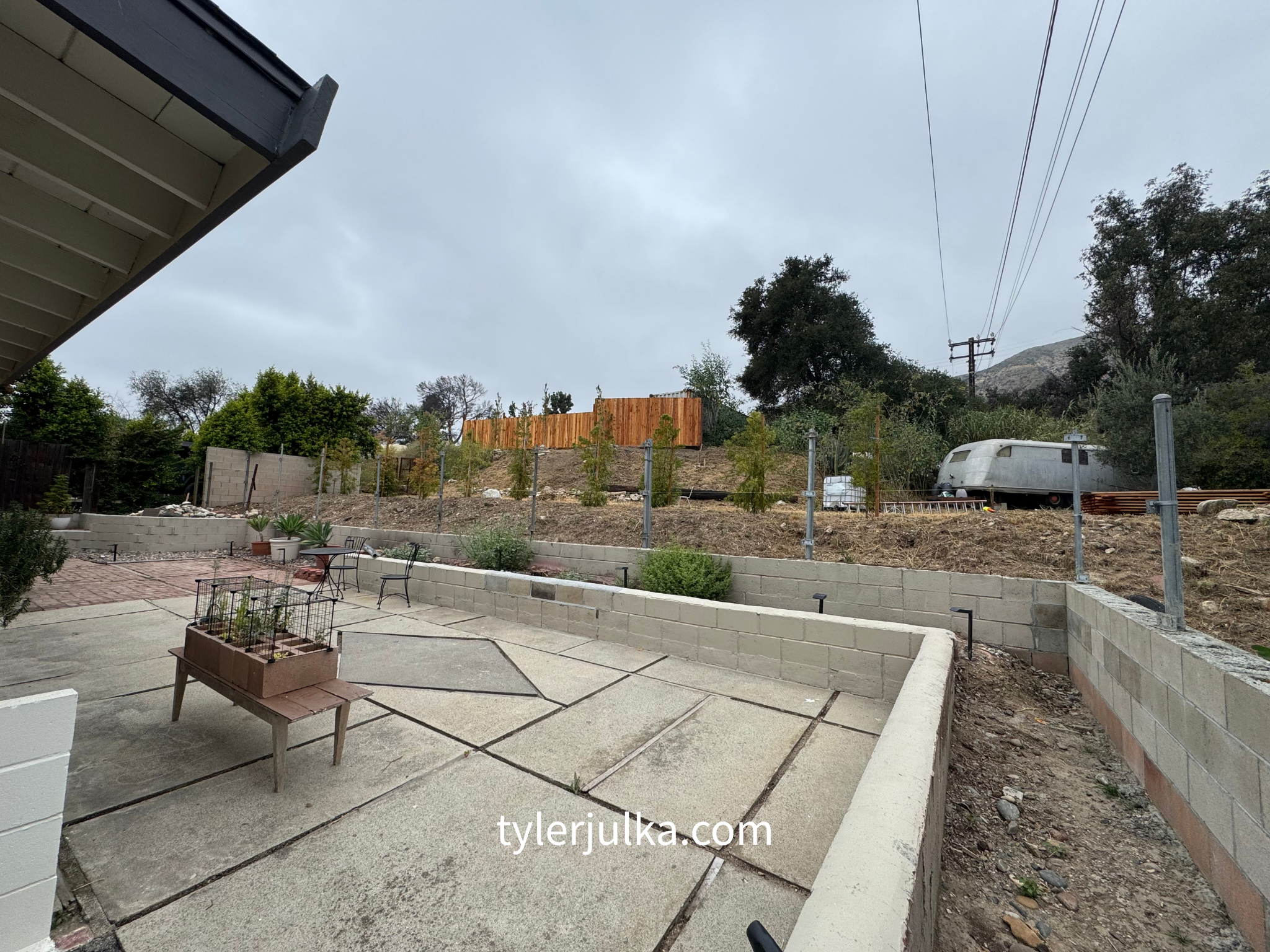
Steel posts on a block wall was the only thing that made it through the fire.
The fence I took out of the scope
I'll be honest about this part, because it's the part that matters.
My original quote ran the wood fence all the way to the house — because that's what was asked for, and that's how fences have always been built here. It wasn't until we were about to start that I paused and reconsidered. California's wildfire building standards have been changing fast since the fires, and the direction is clear: the first five feet around a structure — Zone 0 — is meant to be an ember-resistant zone, free of combustible material. A wood fence tied directly into the house is exactly the thing the new rules exist to prevent. It acts like a fuse.
I couldn't proceed without bringing it up, even though bringing it up meant a smaller job for me.
So we had the conversation. I walked them through what we'd observed about how the flames moved on their own property, and gave them the resources to look into themselves — the Title 24 WUI provisions and the state's defensible-space zone framework. They agreed: the section connecting to the house should be block wall, not wood. We removed 35 linear feet of fence installation from the scope and issued a credit to offset the masonry work.
Better to catch it before the installation than after — or a couple of years down the road, when enforcement catches up with everything being built right now.
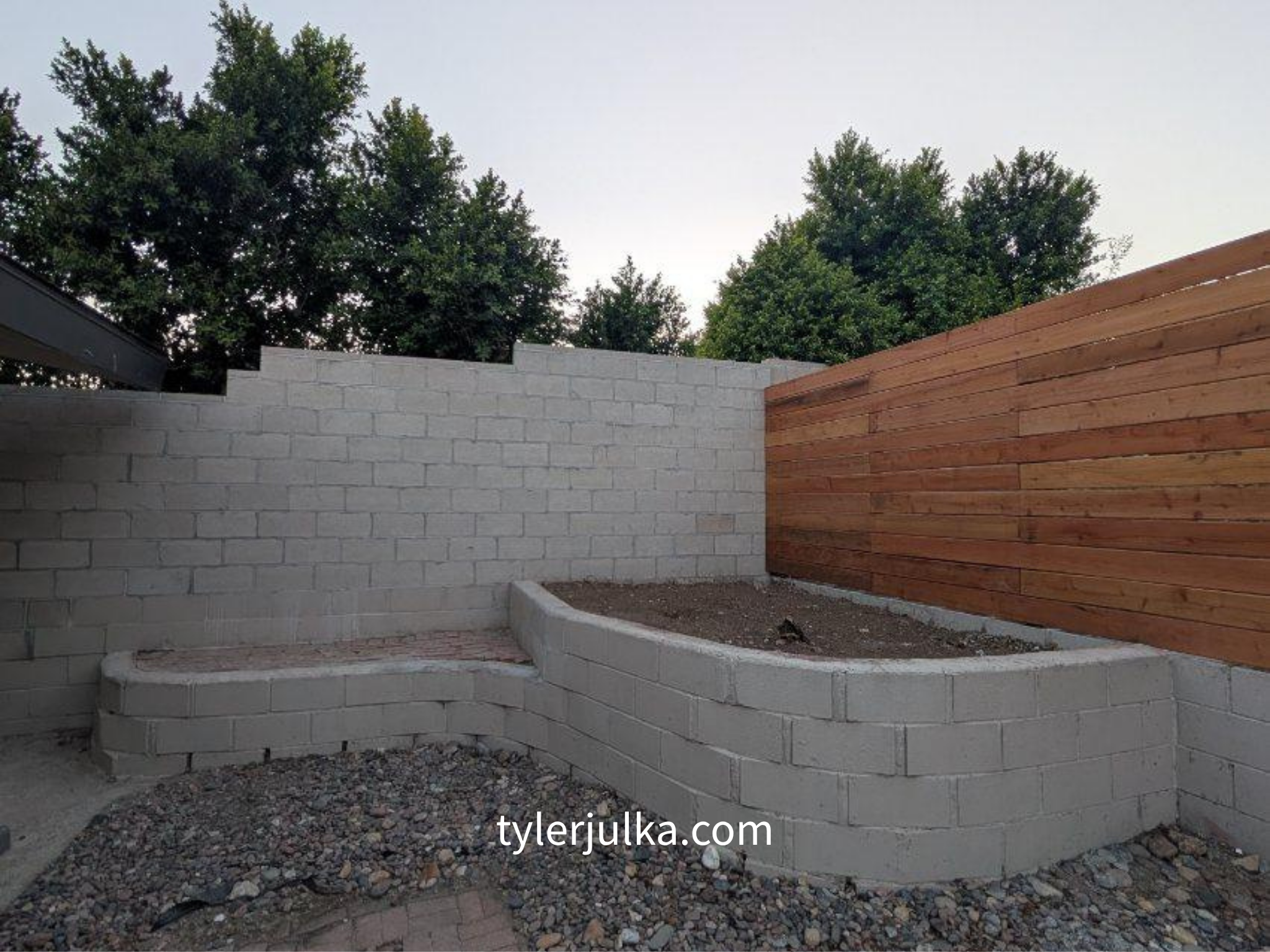
Block wall section removed from my scope and built by masonry contractors. Redwood fence is partially in Zone 1 - acceptable.
Zone-correct design
Here's the part where I have to argue with my own findings.
The hedge saved that fence. Living vegetation, pressed up against combustible boards, near the house — and it acted as a heat shield. So shouldn't the lesson be more hedges?
No. And the distinction is the whole point.
A lush, irrigated hedge on the day of that fire behaved as a radiant barrier. The same hedge, desiccated after a dry December and hit by a Santa Ana wind event, is a fuse laid against the structure. What we observed was an outcome, not a strategy. You cannot legislate hydration, and you can't build a safety plan on the assumption that the landscaping will be green on the worst day of the year. That's why the code treats combustibles near the structure as a liability across the board — it has to hold in the worst case, not the lucky one.
So the design logic for this rebuild runs zone by zone:
At the structure (Zone 0): noncombustible. The block wall carries the perimeter to the house. No wood within the ember-resistant zone.
Beyond it: this is where wood belongs — and where redwood earns its place. Out along the property line, on steel posts, over a block wall base that separates the boards from ground fuel, Con Heart redwood gives you a fence that's beautiful, durable, and positioned where the material makes sense.
That's what "fire-wise" actually means in practice. It isn't a special product or a coating. It's putting the right material in the right zone — and being willing to tell a client when the answer to "can you build it here?" is no.
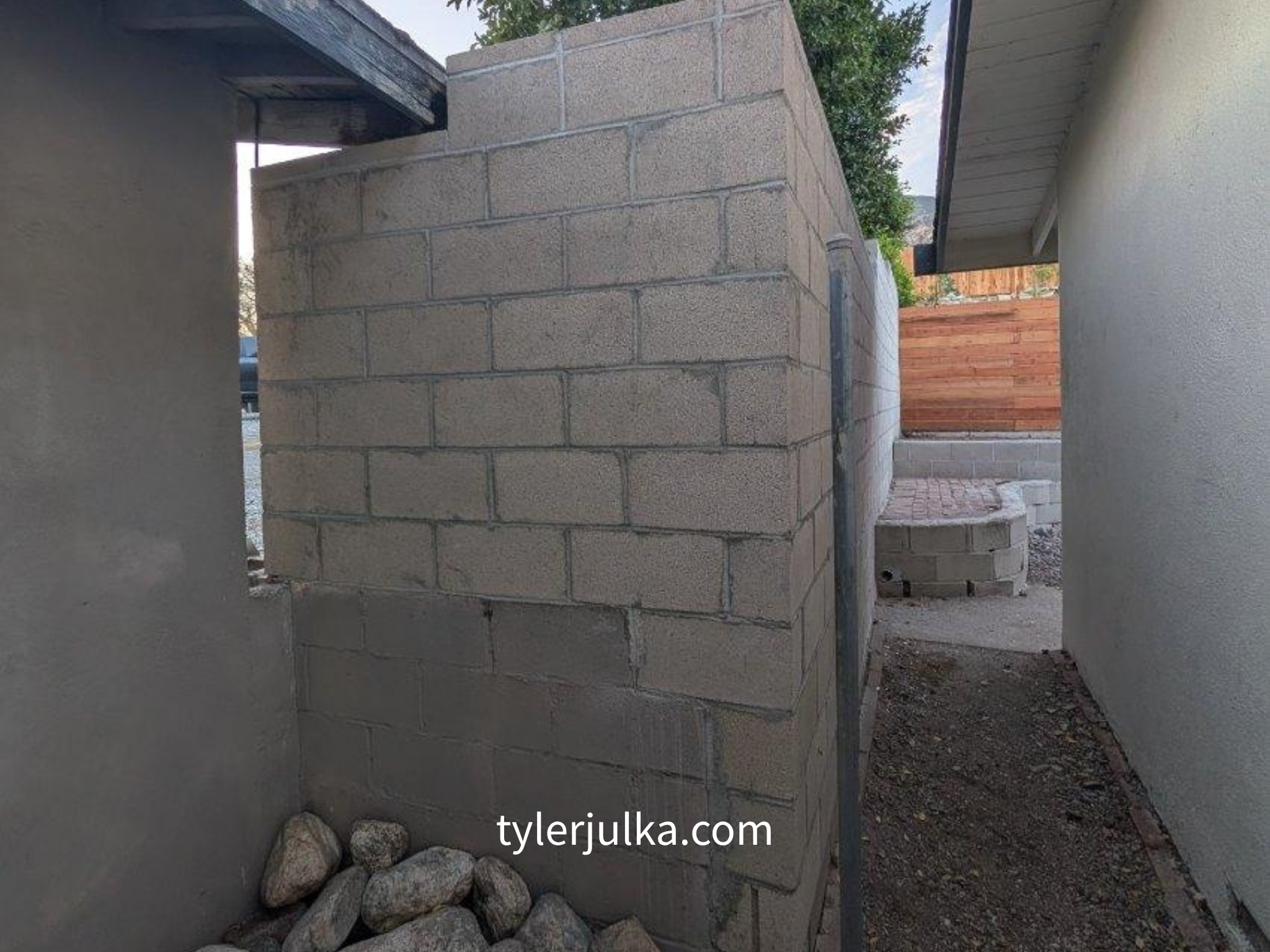
Zone 0 (0-5 feet) block wall detail.
The build
The surviving steel posts set the sequence. They'd been through the fire and were still true, but the old brackets weren't going to carry the new design — so the first task was replacing every bracket to mount a 2x6 vertically to each steel post. That gave us straight, solid wood framing on fire-tested steel bones.
Horizontal fencing punishes sloppy framing more than any other style. Every board runs long, every seam shows, and the eye reads a wandering joint from across the yard. So where the framing needed it, we added 2x4 backing — not for strength, but for discipline: consistent sizing, and a solid landing for every seam so the joints fall where they're planned, not where they happen. That backing is invisible in the finished fence. It's also the difference between a fence that reads clean at year one and a fence that reads clean at year fifteen.
Not pictured: along the driveway, the grade drops, and we stepped the fence down its run rather than raking it, so the modern look holds its horizontal lines.
Every board went on with stainless steel screws. Con Heart weathers to a quiet silver-grey if you let it, and standard fasteners corrode and streak black down the face of the boards within a couple of seasons. Stainless costs more per box and nothing per decade.
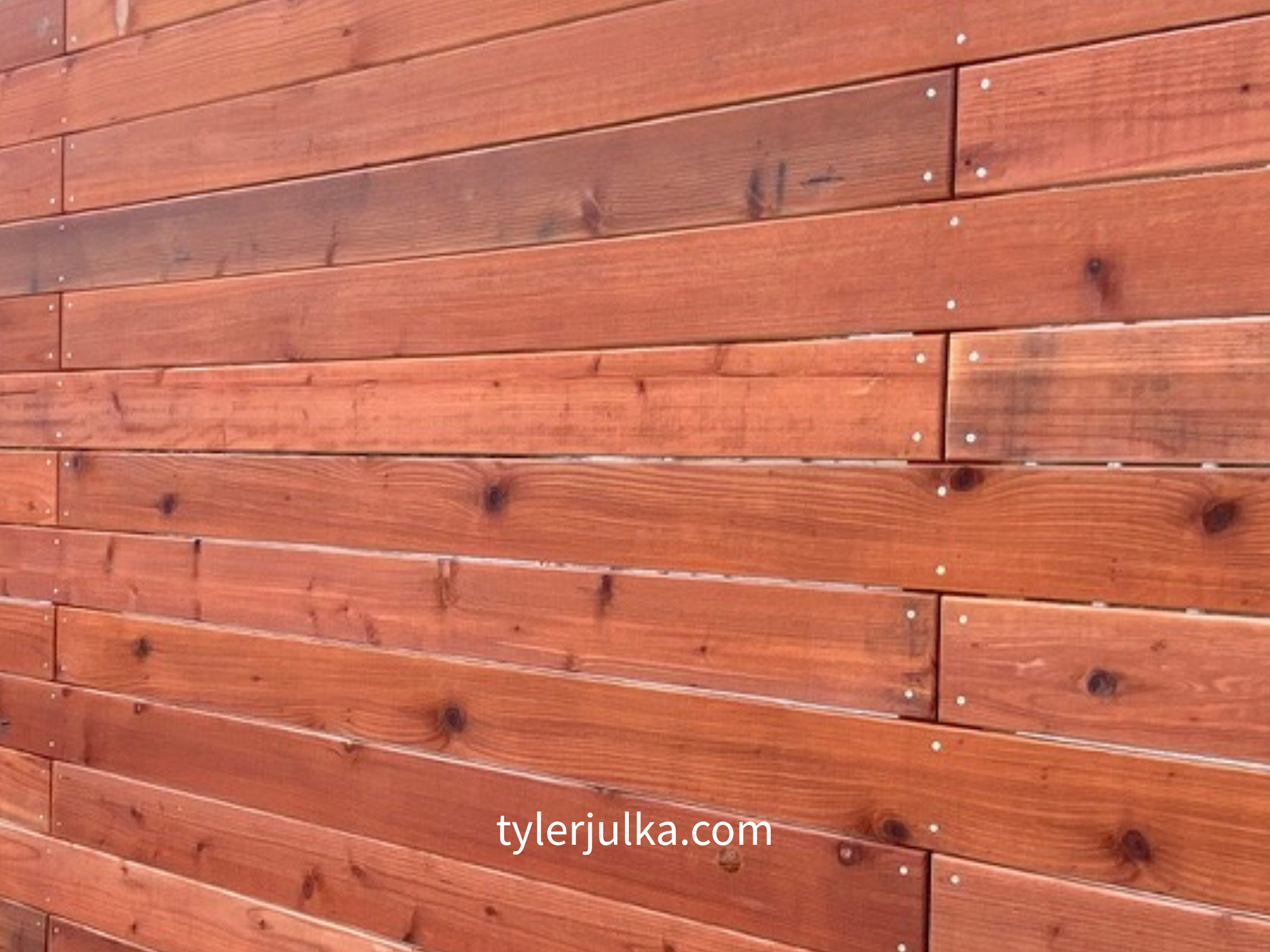
Spacing and seam discipline details.
The result
A 6-foot horizontal Con Heart perimeter, running clean over the block wall line, on the same steel posts that stood through the Eaton Fire — with masonry, not wood, carrying the last run to the house. The fence does what the clients asked for: privacy, warmth, a modern line against a hillside that's coming back green. And it does something they didn't ask for at the start: it's positioned to be standing after the next one, too.
If you're rebuilding in Altadena
Four things I'd tell any neighbor at the fence line:
Plan the last five feet in masonry or metal from the start. Zone 0 — the first five feet from the structure — is headed toward noncombustible, period. It's far cheaper as a design decision than as a change order, and cheaper still than a retrofit after enforcement arrives.
Ask your fence contractor what Zone 0 is. If you get a blank look, keep looking. Everything built in this corridor right now will live under the new rules for decades.
Reuse what the fire tested. Steel posts that went through the burn and are still plumb and true can carry your new fence. Have them checked — but don't pay to demolish good bones.
Wood still belongs on your property line. The answer to fire risk isn't vinyl everything — it's the right material in the right zone. Beyond the ember-resistant zone, a dense heartwood fence, kept off ground fuel, is a legitimate and beautiful choice.
Project data
Location: Altadena, CA — Eaton Fire corridor
Completed: June 2026
Scope: Perimeter rebuild: 6-ft horizontal privacy fence; stepped run at driveway; block wall section at structure interface; 135 LF
Material: Construction Heart (Con Heart) redwood
Structure: Original steel posts salvaged and reused; new brackets; 2x6 vertical mounts; 2x4 seam backing
Fasteners: Stainless steel
Zone 0 interface: CMU block wall — no combustible material at the structure
Contractor: T.J. Julka Construction, Inc. — CSLB #1104821, licensed and insured
FAQ
Can I have a wood fence in a fire hazard zone?
Yes — outside the ember-resistant zone. Wood fencing remains a legitimate choice along the property line; what's changing is the first five feet around the structure, where combustible materials are being designed out.
What is Zone 0?
Zone 0 is the first five feet around a home — the ember-resistant zone in California's defensible-space framework. The design goal is nothing combustible in that band: no wood fencing tied into the house, no fuel for embers to land in.
How close to the house can a wood fence be?
A wood fence shouldn't tie directly into the structure. The run that meets the house should transition to a noncombustible material — masonry or metal — before it enters the first five feet.
Is redwood fire-resistant?
Honestly: redwood is wood, and wood burns. Dense heartwood grades like Con Heart perform better than thin sapwood pickets, but no wood belongs in Zone 0. Fire-wise fencing is about placement first, material second.
Did making the fence "fire-wise" cost more?
On this project it wasn't an upcharge — it was a scope swap. We removed the wood run at the house and credited it toward the masonry section. Zone-correct design is mostly about putting the budget in the right places, not adding to it.